


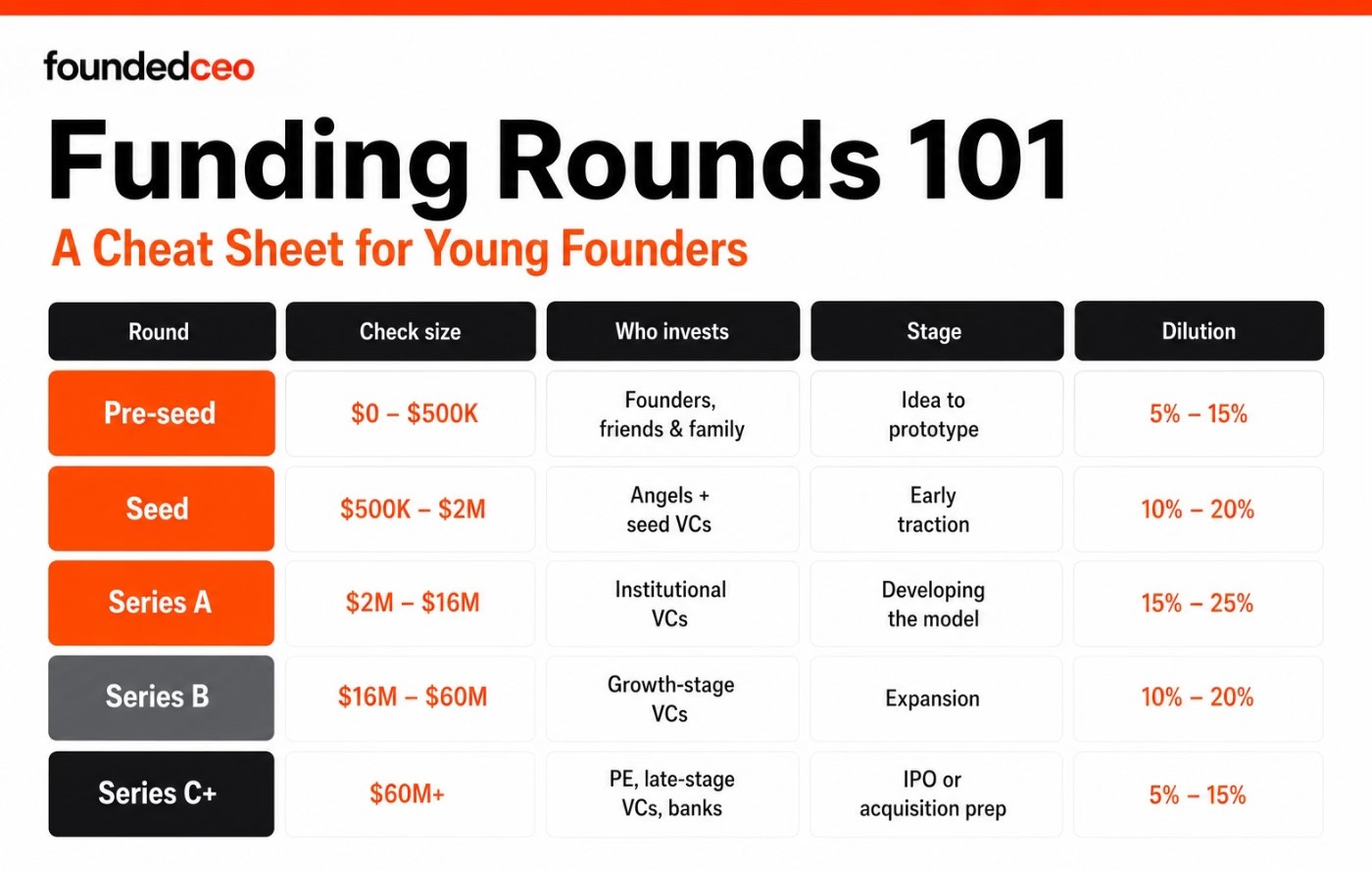
Every company that’s ever raised outside capital moved through the same basic sequence of rounds to get there. What changes at each stage is the size of the check, who’s willing to write it, what they need to see before they will, and how much of the company a founder gives up to get it. Most first-time founders learn this sequence by living through it, usually while making avoidable mistakes along the way. Understanding it in advance is one of the fastest ways to walk into a fundraise knowing exactly what a given investor expects from you at that specific stage.
1. Round:
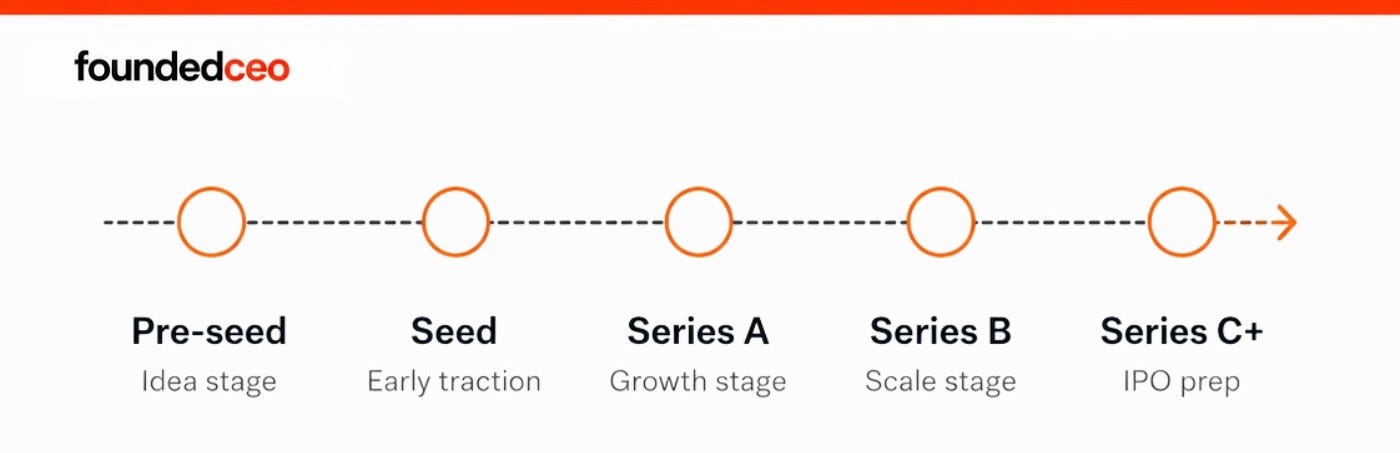
A round, at its simplest, is when a startup raises money from investors in exchange for equity. Rounds typically grow in size as the company de-risks: pre-seed, to seed, to Series A, and beyond, with the check size, the investor profile, and the amount of the company sold off all shifting predictably at each step. What trips founders up isn’t the definition, it’s assuming every round is just a bigger version of the last one. Each round is really a different transaction with a different buyer, and the terms, the pace, and the expectations change completely depending on which one you’re actually raising.
Here’s exactly how much each round raises, who writes the checks, and what it costs you in equity:
2. Pre-Seed ($0 – $500K):
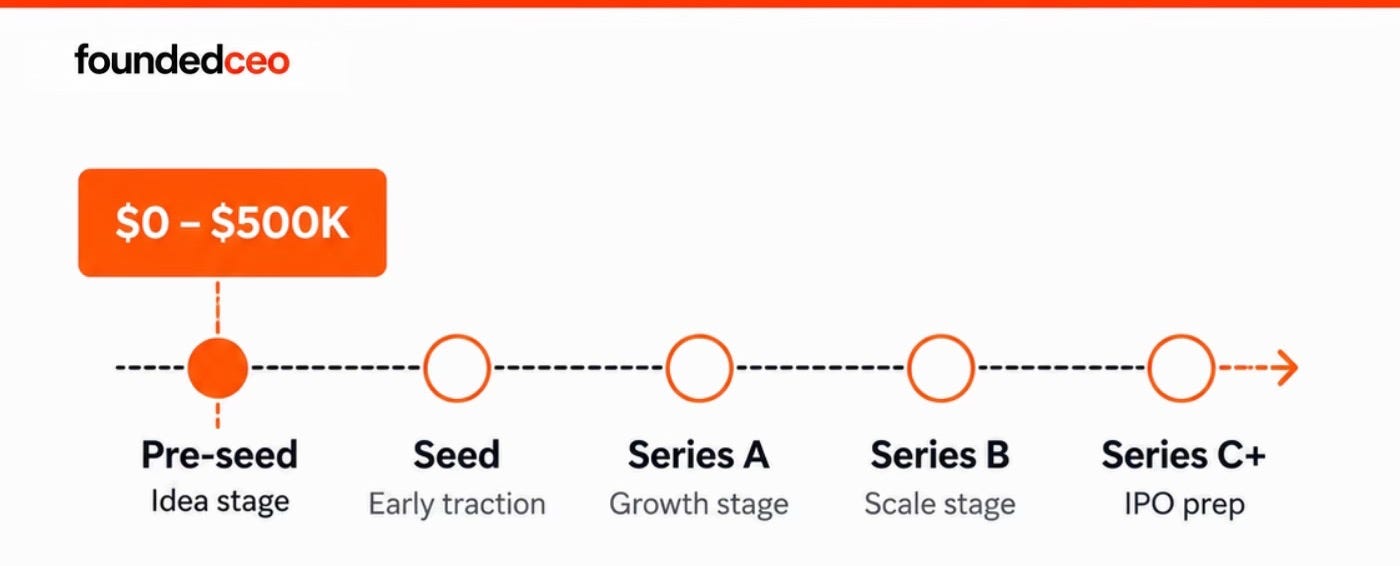
Pre-seed is the very first money into a company, typically $0 to $500K, raised from founders themselves, friends, family, or angel investors before any real traction exists. Dilution at this stage runs 5% to 15%, which is relatively low precisely because the company isn’t worth much yet and the capital raised is small. The single biggest mistake founders make at pre-seed is treating it like a growth round, hiring ahead of validation, spending on marketing before there’s a product worth marketing, and burning through the small buffer that was supposed to buy time to find product-market fit, not prove it’s already been found.
3. Seed Round ($500K – $2M):
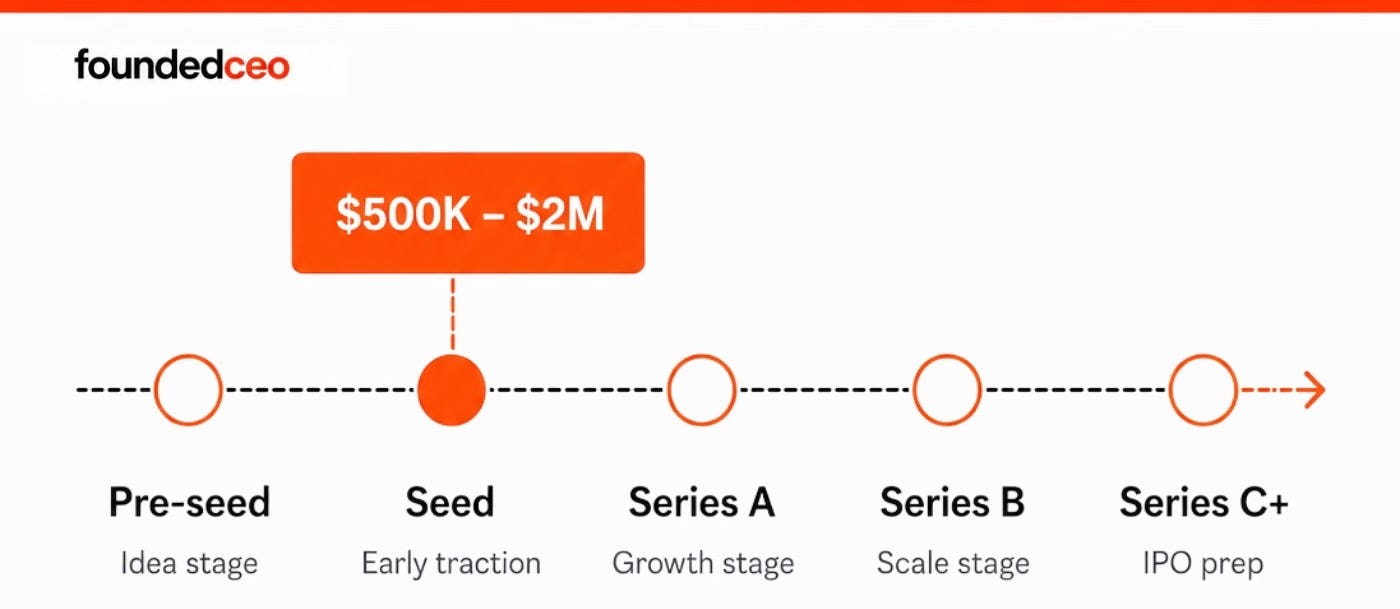
Seed is typically the first institutional check a company receives, ranging from $500K to $2M, and it’s usually the point where angels are joined by dedicated seed-stage VCs. The capital here goes toward finding product-market fit and getting real customers through the door, not just building the product but proving people will actually pay for it. Dilution jumps to 10% to 20% as investors take a bigger equity stake in exchange for backing a company that still has no proven business model. This is also the round where founders should already be tracking their earliest churn and CAC numbers, even at a tiny scale, because the Series A conversation six to twelve months later will be a direct interrogation of whether those early numbers are trending the right direction.
4. Series A ($2M – $16M):
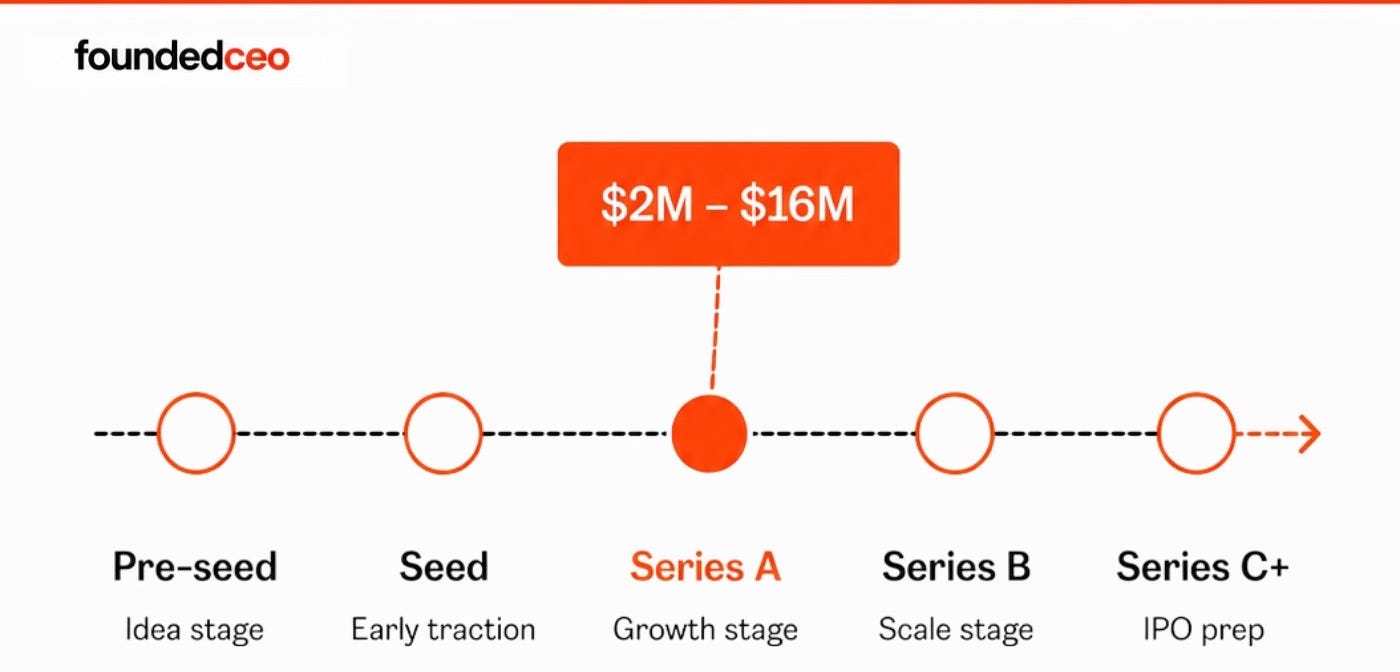
Series A is a priced round raised after a company has demonstrated real, measurable traction, ranging from $2M to $16M and typically led by an institutional VC. The capital is used to scale the team, the product, and the go-to-market motion that seed-stage traction proved was working. Dilution here is the steepest of any round, 15% to 25%, because Series A is where a company transitions from an idea being validated to a business model being built out, and investors price that inflection accordingly. Founders raising a Series A today are expected to walk in with command of the metrics that matter: CAC, LTV:CAC ratio, burn multiple, and a churn number that isn’t quietly undermining the growth story on the slide before it.
5. Series B ($16M – $60M):
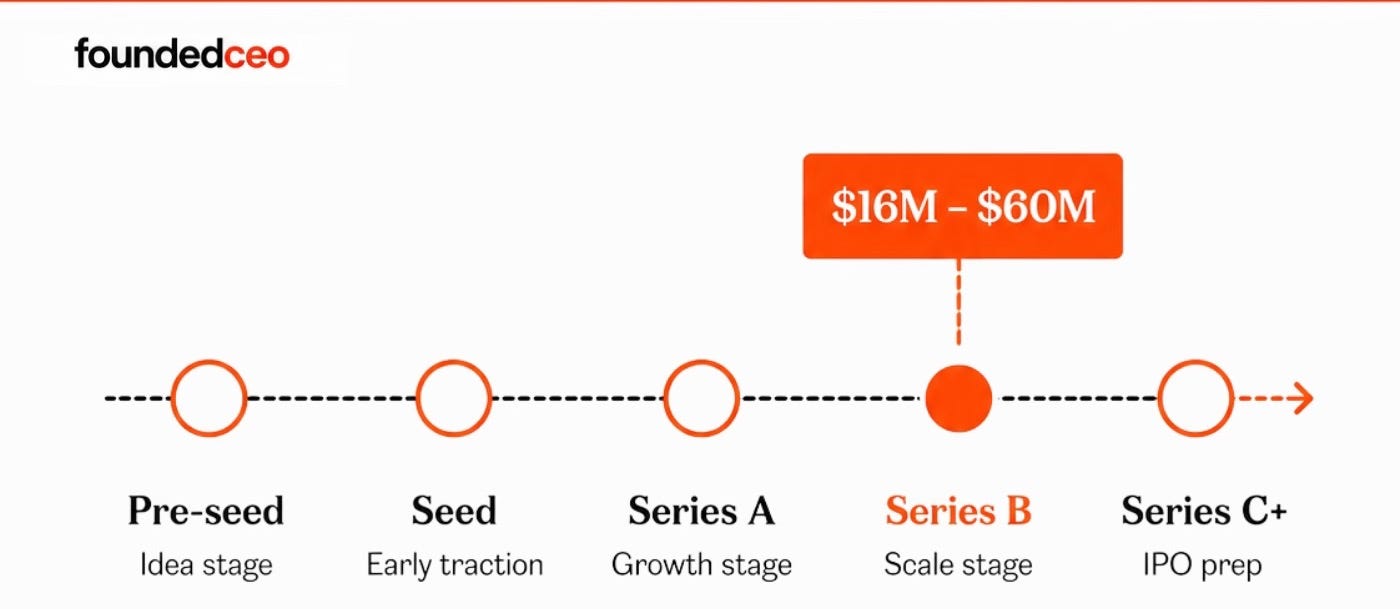
Series B is a later-stage round raised to expand an already-proven business, ranging from $16M to $60M and led by growth-stage VCs rather than the seed and Series A investors who took the earlier risk. The capital goes toward entering new markets, growing headcount meaningfully, and scaling operational capacity that a smaller team couldn’t support. Dilution moderates back down to 10% to 20%, since the company now has enough proven value that a smaller percentage buys a much larger dollar amount. The metric that matters most heading into Series B is Rule of 40. Investors at this stage want to see growth and profitability in the same sentence, not growth used to excuse a lack of it.
6. Series C+ ($60M+):
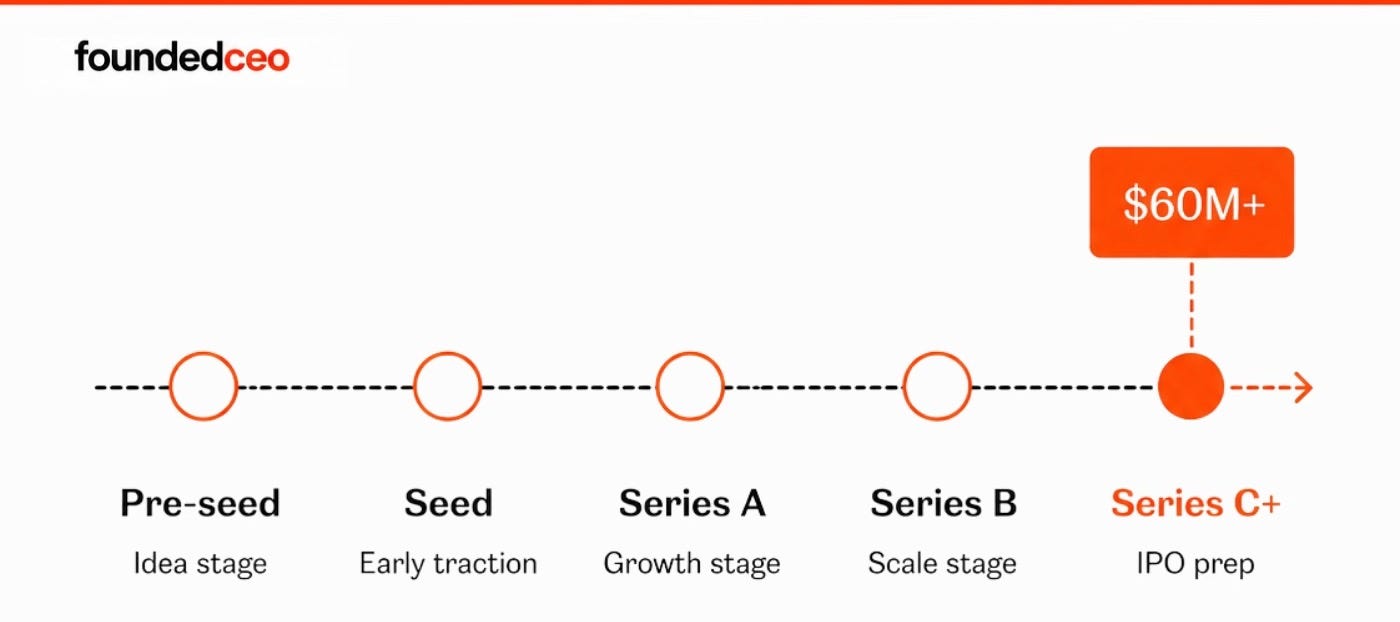
Series C and beyond covers every round from $60M upward, raised by companies already operating at real scale, typically from private equity, late-stage VCs, and sometimes banks. Investors writing these checks are betting on one of two outcomes: the company becoming an outright market leader, or a clear path to going public. Dilution drops back to 5% to 15%, the lowest of any priced round, because the company’s valuation is now large enough that even a small percentage represents a substantial check. By this stage, a founder who can’t produce clean ARR, NRR, gross margin, and operating margin numbers on demand isn’t going to get in the room, let alone get a term sheet.
Why It Matters: The reason this sequence matters isn’t just knowing the numbers, it’s understanding that every round is a different audience with a different question they need answered before they’ll write a check. Pre-seed investors are betting on a person and an idea, seed investors are betting on early signal, Series A investors are betting on a repeatable model, Series B and Series C+ investors are betting on execution at scale. Founders who raise successfully are the ones who understand which question is actually being asked at each stage, rather than pitching every round with the same story that worked to get the last one closed.
The Takeaway: Pre-seed gets you a prototype. Seed gets you product-market fit. Series A gets you a scalable model. Series B gets you market expansion. Series C+ gets you to the finish line. The check sizes grow by roughly 4x to 8x at every stage, the dilution shifts up and then back down as the company de-risks, and the questions investors are asking change completely each time. Know which round you’re actually raising, and know exactly what that investor needs to see before you ever get in the room.